It is hard to tell whether Operation Epic Fury achieved its strategic objectives, because it seems to me there was no real strategy. From my perspective, the plan was simply to blow things up and look tough. The war achieved the former but clearly not the latter. Looking tough is only partly about destruction. Without a long-term strategy that includes diplomacy and punitive sanctions, there will be no lasting benefit.
That raises the question of whether Operation Epic Fury was worth it. The White House will vigorously argue that it was, while average Americans will look at the direct impact on their daily lives. It is estimated that we have spent $158 billion more because of higher gas and diesel prices. [1]
There is little disagreement that the closing of the Strait of Hormuz disrupted supply chains, including those for goods destined for America. As of this writing, the straight remains effectively closed, 260 days after the United States attacked Iran. The disruption of oil flow raised shipping costs for those goods and contributed significantly to the worst inflation in years.
The war has not been cheap. As of November 2026, the United States has spent an estimated $45 to $48 billion on the war [2], and the cumulative cost continues to climb. The funding comes from a single source: the American people. I wonder how many of us would have preferred to put that money toward a different objective, one with a clear strategy, such as improving the safety of flying.
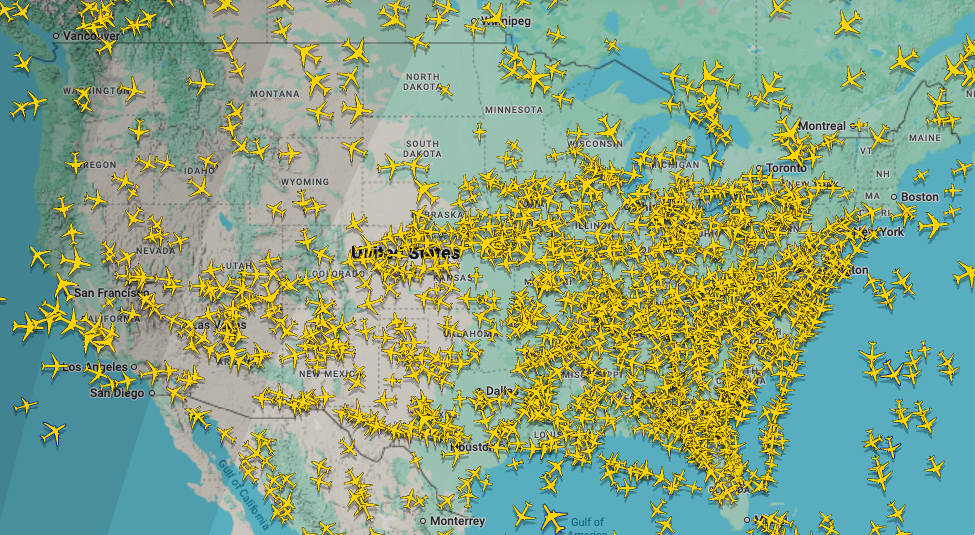
The FAA-ordered ground stop of all U.S. flights on November 14, 2026, was caused by aging communications equipment that failed under peak usage. There is a definitive solution to make air travel safer, and it would cost about $38 billion, which is less than what Operation Epic Fury has cost us and far less than the $158 billion we’ve spent on higher fuel prices. The solution is to upgrade the Air Traffic Control (ATC) system with state-of-the-art technology and repair the deteriorating control tower infrastructure.
What would you choose for spending $48 billion: a discretionary war that accomplished little, or safer air travel for the 1.1 billion commercial passengers [3] who fly each year under ATC across all domestic and international carriers in U.S. airspace?
[1] Brown University, Watson School of International and Public Affairs. (n.d.). Consumer cost burden. Costs of War. Retrieved November 14, 2026, from https://iranwarcost.watson.brown.edu/
[2] Congressional Budget Office. (2026, September 16). Estimating the cost of combat operations against Iran. $38.1 billion in DoD costs through Aug. 1 (plus $2B–$3B/month ongoing) https://www.cbo.gov/publication/62756
[3] https://www.faa.gov/air_traffic/by_the_numbers

