This turned into an extremely long blog post, which I freely accept will reduce who reads it — hence the TL;DR section below. There are also three appendices that summarize specific anti-climate actions taken by Trump and his appointees. As I stated when I started this blog, my goal was never followers or notoriety. It was, and remains, a way for me to express and preserve ideas I’ve stumbled upon. Often that stumble occurs when I see humans acting irrationally, which seems to be all the time.
TL;DR
Since returning to office in January 2025, Donald Trump has pursued a remarkably broad reversal of U.S. climate policy: promoting fossil fuels and coal while obstructing renewable energy, weakening greenhouse-gas regulations, withdrawing from international climate efforts, and reducing parts of the government’s climate-science infrastructure. The breadth of the campaign suggests something larger than conventional Republican deregulation.
This is not what I would consider normal behavior.
No single motive adequately explains it. Trump’s policies sit at the intersection of his genuine skepticism toward climate policy, his concept of fossil-fuel “energy dominance,” MAGA cultural and political identity, the economic interests of fossil-fuel industries, and the preferences of Americans who value inexpensive energy and freedom from regulations that might constrain their choices. These forces reinforce one another unusually well.
The consequences should not be measured by trying to blame today’s hurricanes, floods, droughts, or heat waves on Trump. The scientifically meaningful comparison is with what would have happened under the policies he replaced. The evidence indicates that Trump’s policies will increase U.S. greenhouse-gas emissions relative to that trajectory, while some rollbacks will also forgo measurable public-health benefits associated with reduced air pollution.
Trump’s political advantage is that the benefits he promises — lower costs, preserved jobs, fewer regulations, abundant fossil fuels, and consumer choice — are immediate and visible, while many of the costs are delayed, dispersed, and probabilistic. Americans aren’t merely passive recipients of this bargain; many actively prefer the energy-intensive lifestyles and consumer choices Trump promises to protect.
That produces the fundamental asymmetry at the heart of both Trump’s climate policy and its political appeal: We experience the benefits immediately. We inherit many of the costs later.
A persistent and pervasive pursuit of an anti-climate agenda
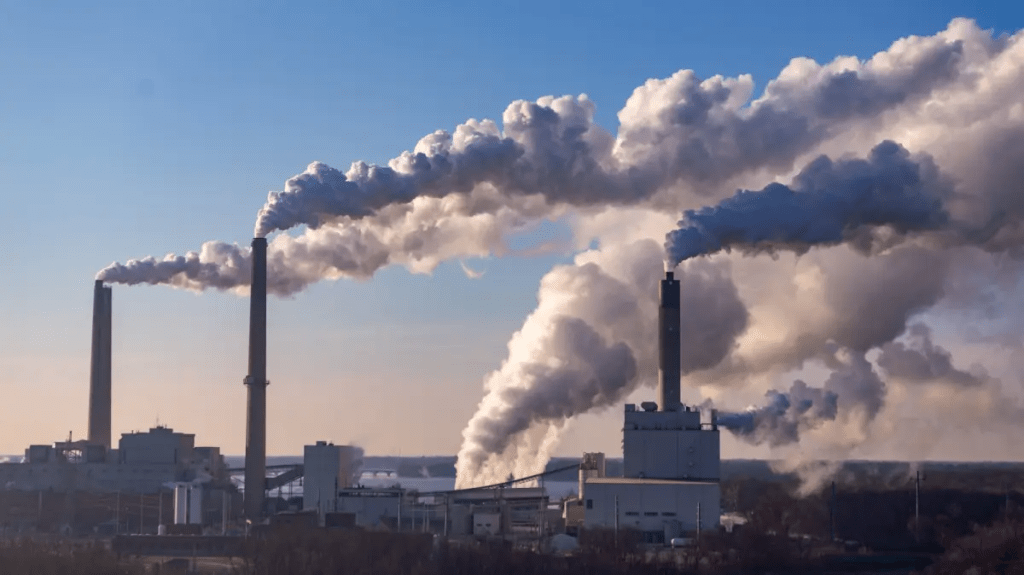
Since returning to office in January 2025, Donald Trump has not merely relaxed a few environmental regulations. His administration has undertaken a remarkably broad reversal of federal climate policy: expanding support for fossil-fuel production, intervening to prolong coal-fired generation, obstructing wind development, reducing federal support for renewable energy and electric vehicles, dismantling greenhouse-gas regulations, withdrawing from international climate commitments, and cutting parts of the government’s climate-science and assessment infrastructure. Because these actions have occurred through dozens of decisions scattered across numerous agencies, their collective scope is easy to miss in the daily news. Viewed together, however, they reveal a remarkably consistent direction. The individual actions, dates, status, climate mechanisms, and primary sources are catalogued in Appendix A.
Any one of these actions could reasonably be regarded as an ordinary change in regulatory philosophy following an election. A Republican administration can be expected to regulate industry less aggressively than a Democratic one, and reasonable disagreements exist about the costs, benefits, and effectiveness of individual environmental regulations. What makes Trump’s second term unusual is not simply that he has chosen less regulation — it is the breadth and intensity of the effort, extending beyond conventional deregulation to active intervention against some renewable-energy projects and reductions in parts of the government’s climate-science infrastructure. Taken in aggregate, these actions raise a more interesting question than whether any particular regulation was wise or excessive: why is Trump attacking climate policy so aggressively?
The obvious explanations are political. Climate-change skepticism is common within Trump’s MAGA base, fossil-fuel companies benefit from many of his policies and contribute heavily to Republican campaigns, and environmentalism has become culturally associated with Democrats and the political left. There is evidence for all of these explanations, but none adequately accounts for the entire pattern. What appears to be happening instead is an unusual convergence of ideology, politics, economics, cultural identity, industry interests, and Trump’s own preferences. Political forces that normally constrain one another are, in this instance, largely reinforcing one another.
More Than Deregulation
Trump provided his formal rationale on his first day back in office. His January 20, 2025 executive order, “Unleashing American Energy,” described recent energy regulations as “burdensome and ideologically motivated” and argued that they had restricted development of American energy resources, raised costs, reduced employment, damaged manufacturing, and weakened national security. The alternative laid out in the order was straightforward: encourage domestic energy development, remove regulatory restrictions, and restore consumer choice.
Those concerns should not simply be dismissed as pretexts. Environmental regulations impose costs as well as benefits, energy reliability matters, industrial competitiveness matters, and consumers understandably care about the prices of gasoline, automobiles, electricity, and home heating. Regulations do not become immune from cost-benefit analysis merely because their stated objective is reducing greenhouse-gas emissions. If Trump’s actions consisted principally of recalibrating regulations his administration believed imposed excessive costs for comparatively small climate benefits, his program could fairly be described as an aggressive version of traditional Republican deregulation.
The difficulty is that some of the administration’s actions don’t fit that explanation well. EPA Administrator Lee Zeldin made the distinction unusually clear when announcing a sweeping collection of environmental rollbacks in March 2025, describing the initiative as driving a dagger into the heart of what he called the “climate change religion.” That is not the language of an administrator arguing that the marginal cost of eliminating another ton of carbon dioxide has become excessive — it characterizes the intellectual framework surrounding climate policy itself as ideological, suggesting the target is broader than any single regulation.
Wind
The administration’s treatment of wind energy makes this distinction especially visible. If the objective were simply abundant, inexpensive, and reliable domestic energy, there would be no obvious reason to oppose an energy source merely because it doesn’t burn fossil fuel. One could eliminate subsidies, impose ordinary permitting requirements, and let wind compete with coal, natural gas, nuclear, and solar on whatever terms the government considered neutral. Instead, the administration has imposed additional obstacles on wind development, interfered with projects already underway, and, by August 2026, negotiated agreements under which developers surrendered offshore wind leases while redirecting capital toward fossil-fuel projects. German energy company RWE, for example, agreed to give up three offshore wind leases while committing roughly $900 million to an LNG project and $300 million to natural-gas turbines.
Whatever the merits of those individual decisions, they reveal something important about the administration’s philosophy. This is not simply a government withdrawing from energy markets and letting technologies compete without federal intervention. The government remains deeply involved; it has just changed which forms of energy it prefers. Understanding why requires looking beyond deregulation to Trump’s broader concept of American energy policy.
That concept is captured in a phrase the administration uses repeatedly: energy dominance. Trump doesn’t treat oil, natural gas, and coal merely as commodities. He presents their abundance as an American strategic advantage tied to manufacturing, employment, trade, national security, and geopolitical influence. Seen through that framework, restrictions on drilling become restrictions on American productive capacity, limits on LNG exports constrain American geopolitical leverage, and the retirement of a coal plant represents the voluntary surrender of generating capacity. Even regulations meant to speed the shift away from gasoline vehicles can be understood as government interference with consumer choice.
Climate policy therefore appears objectionable not merely because compliance costs money, but because its fundamental objective — deliberately reducing fossil-fuel consumption — conflicts with an administration that regards America’s abundance of those fuels as a national asset. Climate policy essentially asks how society can meet its energy needs while progressively reducing greenhouse-gas emissions. Trump’s energy policy starts from a different question: how can the United States maximize the economic and strategic value of the energy resources it already has? Those two questions occasionally produce the same answer, but often they don’t.
The conflict has grown still more powerful because climate policy is no longer merely technical energy policy. Over the past two decades it has acquired a cultural identity. Electric vehicles are no longer simply automobiles powered by electric motors, wind turbines are not merely electricity generators, and the Paris Agreement is not simply a mechanism for coordinating international emissions reductions. Each has taken on political meaning. The administration’s repeated vocabulary — “climate change religion,” “EV mandate,” “consumer choice,” “American Dream,” “beautiful clean coal,” “energy dominance” — places climate policy within a broader argument about government regulation, national sovereignty, expertise, traditional industry, and individual freedom.
Once that transformation occurs, opposing climate policy can generate political benefits independent of its effects on atmospheric carbon dioxide. Stopping an EV regulation becomes evidence that government won’t dictate what kind of car Americans may buy. Preserving a coal plant becomes evidence that traditional American industry hasn’t been abandoned. Leaving an international climate agreement demonstrates resistance to constraints imposed by multinational institutions. Opposing wind projects can be framed as resisting environmental interests overriding local landscapes, economic development, or energy reliability. Climate policy thereby becomes one piece of the larger MAGA argument over who should hold power in American society, and whose vision of America should prevail.
Economic interests reinforce that political alignment. Oil and gas companies benefit from expanded drilling and leasing, LNG producers benefit from export expansion, coal producers benefit when coal-fired plants keep running, and petroleum producers benefit when transportation electrification slows. These industries are also important sources of Republican political support, which makes it impossible to discuss Trump’s climate program seriously without examining that relationship.
The most striking episode occurred during the 2024 campaign. At a dinner with oil executives at Mar-a-Lago, Trump reportedly suggested industry leaders raise $1 billion for his campaign while discussing policies he intended to pursue if reelected, including reversing environmental regulations and expanding fossil-fuel development. The episode later prompted a congressional investigation into whether Trump had proposed a quid pro quo. The evidence warrants caution: we know Trump solicited extraordinary financial support from an industry while promising policies that would benefit it, and we know many of those policies were later implemented. We do not know that particular regulatory decisions were purchased with campaign contributions.
There’s another reason not to treat money as the master explanation: industry interests don’t fully account for some of the administration’s actions. Cutting climate research doesn’t immediately sell another barrel of oil, weakening the National Climate Assessment doesn’t directly raise an oil company’s profits, and diminishing scientific or monitoring capacity isn’t necessary to lower gasoline prices. Withdrawing from international climate institutions likewise provides political and ideological benefits that are hard to translate into an immediate financial benefit for an individual fossil-fuel producer. Industry interests clearly reinforce Trump’s climate agenda, but they don’t fully explain it.
The remaining explanation may be the simplest: Trump appears to believe much of what he says. His hostility toward wind energy is longstanding, as are his skepticism of climate policy and his enthusiasm for drilling, coal, and fossil-fuel development. That consistency makes it unnecessary to assume his climate positions are purely transactional. He appears to believe environmental regulation has become excessive, that climate risks have been exaggerated, that America’s fossil-fuel abundance is a competitive advantage, and that governments have used climate concerns to justify unwarranted interference with businesses and consumers. Whether those beliefs are correct is a separate question. Their importance here is explanatory: we don’t need a conspiracy or campaign contributions alone to account for his behavior.
Taken together, these elements help explain why the administration’s climate offensive has been so broad. Deregulatory ideology, economic nationalism, MAGA political identity, fossil-fuel interests, and Trump’s own preferences aren’t competing explanations so much as mutually reinforcing ones. A policy that expands fossil-fuel production can simultaneously satisfy Trump’s conception of national strength, benefit an important industry, appeal to voters hostile to environmental regulation, and demonstrate opposition to Democratic climate policy. Political coalitions rarely achieve that degree of alignment.
Does It Matter?
Establishing why Trump is doing this leaves a different question: does this extraordinary collection of policy changes actually make much difference to the climate? The answer is yes, but not in the simplistic sense sometimes implied by political rhetoric. Donald Trump did not cause a particular 2026 heat wave, hurricane, flood, drought, or wildfire. Today’s weather occurs within a climate shaped by generations of accumulated greenhouse-gas emissions interacting with natural variability. Modern attribution science can increasingly estimate how anthropogenic warming changes the probability or intensity of a given event, but attributing such an event to policies adopted by one president eighteen months earlier would be scientifically indefensible.
The meaningful comparison is counterfactual. We should ask how greenhouse-gas emissions under Trump’s policies will differ from the emissions that would have occurred under the policies he replaced. Appendix B summarizes the available quantitative evidence. The individual estimates can’t simply be added together, because many of the policies interact: vehicle regulations overlap with EV incentives, renewable-energy policies affect power-sector emissions, and coal-retirement decisions overlap with power-plant regulation. Simply totaling every published estimate would double-count some of the same emissions. Despite that uncertainty, the direction of the evidence is remarkably consistent: Trump’s policy changes are expected to produce higher U.S. greenhouse-gas emissions than the trajectory they replaced.
One particularly useful example comes from Trump’s own EPA rather than an environmental group opposed to his policies. In analyzing its proposed repeal of the previous greenhouse-gas standards for fossil-fueled power plants, EPA projected that eliminating the regulation would increase carbon dioxide emissions relative to keeping it. By 2035, the gap reaches roughly 123 million additional metric tons of CO₂ in that year alone. Whatever one’s political view of the regulation, the administration’s own analysis acknowledges the physical consequence of repealing it.
That example also illustrates the right way to evaluate Trump’s effect on the climate. The question isn’t whether average temperature rose during his presidency, but how much additional greenhouse gas enters the atmosphere because policy changed. A coal plant that keeps running years beyond its planned retirement emits carbon dioxide during those extra years. A wind farm that’s never built cannot provide the zero-carbon electricity that might otherwise have displaced some fossil generation. A vehicle fleet that electrifies more slowly burns more petroleum than the alternative fleet would have, and methane leaks that go unprevented add methane to the atmosphere. None of these changes alone determines future climate, but greenhouse gases accumulate, so their effects grow more consequential over time.
This cumulative property also creates an asymmetry between dismantling climate policy and later restoring it. A future administration can reinstate regulations, resume renewable-energy leasing, or restart research programs, but it cannot retroactively undo the greenhouse gases already emitted in the meantime. Temporary policy reversals can therefore leave permanent additions to cumulative emissions unless those gases are later removed from the atmosphere. The climate consequence of Trump’s policies should be understood in those terms: not as an immediate transformation of the weather, but as a shift in the emissions trajectory from which future climate evolves.
The Costs We Don’t See
Climate change isn’t the only pathway through which these policies affect human welfare. Fossil-fuel combustion produces conventional pollutants alongside greenhouse gases. Coal-fired power plants emit particulate pollution and its precursors, sulfur dioxide, nitrogen oxides, mercury, and other pollutants, while motor vehicles and oil-and-gas operations produce their own mix of conventional and hazardous air contaminants. The links between these exposures and cardiovascular disease, respiratory disease, asthma, and premature mortality are well documented.
Appendix C summarizes the available public-health estimates and, importantly, distinguishes between health effects that can reasonably be tied to individual policy changes and those where such attribution would create false precision. Again, some of the strongest evidence comes from Trump’s own EPA. Its regulatory analysis of repealing the previous power-plant greenhouse-gas standards estimates billions of dollars in lost PM₂.₅- and ozone-related health benefits, reaching roughly $15–17 billion in 2035 relative to keeping the standards.
That estimate shouldn’t be translated into a claim that Trump will “kill” some specific number of people. Population epidemiology doesn’t identify particular individuals who fall ill because a regulation changed. Instead, changes in pollution exposure across millions of people shift the expected incidence of disease and premature mortality across the population. The resulting effects are statistically measurable while remaining largely invisible to the people experiencing them — and that invisibility has political consequences.
Consider a community near a coal-fired power plant. Keeping the plant open may preserve jobs, local tax revenue, and generating capacity — all tangible benefits to identifiable people. Continued combustion also preserves pollution exposure, raising the possibility that the same community receiving an economic benefit simultaneously bears a greater health burden. The people affected generally can’t perceive the second effect the way they perceive the first. A worker knows whether his plant remains open and whether his paycheck arrives; he cannot know whether cumulative particulate exposure contributed to a heart attack years later.
This creates what might be called a constituency paradox. Some populations that strongly support Trump’s climate and energy agenda may receive real short-term benefits from it while also bearing some of its longer-term environmental, health, or economic costs. Clean-energy investment offers another example. A substantial share of the manufacturing investment spurred by previous federal clean-energy incentives was occurring in Republican congressional districts, particularly in manufacturing regions of the South and Midwest. Reversing those incentives therefore doesn’t impose economic costs exclusively on Democratic constituencies. Similarly, agriculture, ranching, forestry, and outdoor work — industries especially important in many rural areas that strongly supported Trump — are unusually sensitive to heat, drought, flooding, wildfire, and changes in water availability.
It would be both simplistic and condescending to conclude that these voters are simply voting against their own interests. Their interests genuinely point in different directions depending on which outcome and time horizon you’re weighing. A worker can rationally place enormous value on keeping a well-paying job today while assigning less weight to a statistical reduction in cardiovascular risk twenty years from now. A farmer can care intensely about today’s fuel and electricity costs while giving less weight to an incremental change in drought probability a decade or two out. Understanding this difference helps explain why policies whose aggregate long-term consequences may be adverse can still remain politically attractive to some of the populations that eventually bear part of their costs.
The Day-Trader Problem
The constituency paradox reflects a more general problem in the politics of climate change: humans are extraordinarily attentive to immediate consequences and much less responsive to processes that unfold slowly and probabilistically. In that sense, most of us approach at least part of life with something resembling a day-trader mentality — heavily weighting outcomes within our immediate horizon while discounting consequences that lie well beyond it.
Trump’s climate politics is unusually well suited to that psychology, because many of the benefits he promises are concrete and easy to grasp. A coal plant stays open, a regulation disappears, a company avoids a compliance cost, a consumer keeps access to a preferred type of car, or domestic oil and gas production rises. Whether every promised economic benefit actually materializes is a separate empirical question. Politically, what matters is that the claimed benefit is easy to visualize and can often be traced directly to a government decision.
Many of the costs identified in Appendices B and C have exactly the opposite qualities. Additional cumulative carbon dioxide can’t be seen. An incremental rise in particulate exposure shows up as a change in population risk rather than an identifiable injury. A slightly altered probability of extreme heat decades from now is almost impossible to experience in advance. A renewable-energy project that’s never built becomes an economic counterfactual rather than a visible factory, and the erosion of scientific capacity may become apparent only once information that used to exist is no longer available. The benefits have names and addresses; many of the costs exist as probabilities.
The difference in visibility is compounded by a difference in timing. Political systems run on election cycles measured in years, corporate earnings are reported quarterly, household energy bills arrive monthly, and workers get paid weekly or biweekly. Climate operates over decades and centuries. The incentives facing politicians and voters therefore run on a timescale far shorter than the physical system their decisions affect.
Successful prevention carries an additional political handicap: people can’t directly experience events that didn’t happen. We don’t know who avoided an asthma attack, which farmer’s crop loss was slightly smaller, which community’s flood damage was reduced, or who didn’t die in an extreme heat event because average warming was marginally lower. The cost of prevention, by contrast, shows up immediately on a car’s window sticker, an electric bill, a corporate balance sheet, or a government budget. Climate mitigation therefore asks people to accept visible costs now in exchange for avoiding future losses that, if prevention works, may never become visible at all.
There is also an uncomfortable element of individual responsibility in this equation. Trump’s climate policies don’t operate independently of the preferences of the people who elect him. Americans continue to demonstrate substantial demand for large pickup trucks and SUVs, inexpensive gasoline, air travel, large homes, and other energy-intensive goods and activities. These choices aren’t necessarily irrational; people receive real benefits from comfort, convenience, mobility, space, perceived safety, and personal preference. But they illustrate a fundamental difficulty of climate policy: the benefits of a carbon-intensive choice accrue primarily to the individual making it, while most of the environmental cost is dispersed among millions or billions of other people and extended into the future.
That asymmetry makes “consumer choice” an unusually powerful political argument. The owner of a large gasoline-powered vehicle experiences its utility every day and experiences the price of gasoline every time the tank is filled. Any regulation that raises the vehicle’s cost or restricts its availability is similarly visible. The climate benefit produced by that individual’s reduced emissions, however, is essentially impossible for the individual to perceive. Trump therefore isn’t simply imposing a fossil-fuel agenda on an unwilling population. Part of his political success comes from promising to protect choices that many Americans already prefer, while climate policy often asks them to accept an immediate and identifiable cost in exchange for a benefit that is collective, probabilistic, and remote.
Trump didn’t create this asymmetry, but his political style fits it exceptionally well. His energy rhetoric emphasizes production now, jobs now, lower costs now, consumer choice now, freedom from regulation now. The climate argument, by contrast, asks the public to weigh cumulative consequences that extend beyond the next election and often beyond an individual’s remaining lifetime. Whatever else explains the success of Trump’s climate politics, this difference in time horizon shouldn’t be underestimated.
What Are We Buying, and What Are We Paying?
The original question — why Trump is attacking climate policy so aggressively — doesn’t appear to have a single answer. His administration’s actions are better explained by a convergence of forces that would ordinarily compete with one another. Trump seems genuinely hostile to the climate-policy paradigm; climate regulation conflicts with his broader deregulatory philosophy; fossil-fuel abundance fits his conception of American industrial strength and geopolitical power; opposing climate policy resonates with MAGA political identity; fossil-fuel and traditional industrial interests benefit economically and provide substantial political support; and Trump’s personal preferences, particularly his longstanding hostility toward wind energy, all push in the same direction.
That convergence also helps explain why the program goes beyond ordinary deregulation. If the sole objective were cutting compliance costs, there’d be little reason to actively interfere with renewable-energy projects or shrink parts of the scientific infrastructure used to observe and assess climate change. Those actions make more sense if the administration is opposing not just particular regulations but much of the climate-policy paradigm itself: the regulations designed to cut greenhouse-gas emissions, the incentives meant to speed up alternatives, the international arrangements meant to coordinate action, and parts of the scientific infrastructure through which the problem is measured and understood.
The administration argues its alternative will deliver cheaper, more reliable energy, greater consumer choice, more industrial production, and greater American geopolitical power. Those claims deserve serious evaluation rather than dismissal simply because they conflict with climate objectives. If increased fossil-fuel production lowers energy prices, if eliminating a regulation produces substantial economic savings, or if LNG exports increase American geopolitical leverage, those benefits belong in any serious accounting of the policy.
The accounting can’t stop with the benefits that arrive first, though. The evidence in Appendix B indicates the new policy trajectory will produce greater greenhouse-gas emissions than the trajectory it replaced, while Appendix C documents public-health benefits likely to shrink or disappear as pollution controls are rolled back. Restrictions on renewable energy can eliminate investment and jobs along with regulation, reductions in scientific capacity have consequences for society’s ability to understand and prepare for environmental change, and additional greenhouse gases remain in the climate system long after the administration responsible for them has left office.
That points to a more useful way to evaluate Trump’s climate experiment than asking whether he’s “destroying the climate” or whether some particular hurricane, drought, or heat wave can be pinned on him. The right question is simultaneously simpler and harder: what are we buying with these policies, and what are we paying for it?
The immediate benefits deserve to be counted. So do the delayed costs. The central difficulty is that humans, markets, and political systems are much better at recognizing the former than the latter. That asymmetry doesn’t explain every element of Trump’s climate agenda, but it helps explain why a program that exchanges some future environmental and health protection for present economic, political, and ideological benefits can remain attractive even to people who may eventually bear part of its costs.
Trump Climate Policy Appendices A–C :root { –border: #b8c2cc; –header: #d9e2f3; –stripe: #f7f9fb; –text: #111827; –muted: #4b5563; } * { box-sizing: border-box; } body { margin: 0; font-family: Arial, Helvetica, sans-serif; color: var(–text); background: white; line-height: 1.35; } .container { max-width: 1600px; margin: 0 auto; padding: 24px; } h1 { margin: 0 0 8px; font-size: 28px; } .subtitle { color: var(–muted); margin-bottom: 28px; } .toc { margin: 0 0 28px; padding: 14px 18px; background: #f3f6fa; border: 1px solid #d8dee8; border-radius: 8px; } .toc a { margin-right: 18px; } .appendix { margin: 0 0 42px; page-break-before: always; } .appendix:first-of-type { page-break-before: auto; } h2 { margin-bottom: 4px; font-size: 22px; } h3 { margin-top: 0; margin-bottom: 14px; font-size: 17px; font-weight: 600; } .table-wrap { width: 100%; overflow-x: auto; border: 1px solid var(–border); } table { width: 100%; border-collapse: collapse; min-width: 1100px; font-size: 12px; } th, td { border: 1px solid var(–border); padding: 7px 8px; text-align: left; vertical-align: top; } th { background: var(–header); position: sticky; top: 0; z-index: 1; } tbody tr:nth-child(even) td { background: var(–stripe); } @page { size: Letter landscape; margin: 0.45in; } @media print { .container { max-width: none; padding: 0; } .toc { display: none; } .table-wrap { overflow: visible; border: 0; } table { min-width: 0; width: 100%; font-size: 8px; } th, td { padding: 4px 5px; } th { position: static; } .appendix { break-before: page; } .appendix:first-of-type { break-before: auto; } }Trump Climate Policy Appendices
Appendix A
Trump Administration Climate-Relevant Actions, January 20, 2025–August 2026
| Date | Agency | Action | Status | Climate mechanism | Climate impact | Primary source |
|---|---|---|---|---|---|---|
| Jan. 20, 2025 | White House | Issued Executive Order “Unleashing American Energy,” directing agencies to remove regulatory barriers to energy production, review climate-related regulations, and prioritize fossil-fuel development. | Implemented | Establishes administration-wide energy policy direction favoring fossil fuels and reducing climate-policy constraints. | Expected to increase fossil-fuel production and slow emissions reductions relative to the prior trajectory. | White House Executive Order, “Unleashing American Energy” |
| Jan. 20, 2025 | White House | Withdrew the United States from the Paris Agreement for a second time. | Implemented | Removes the U.S. international climate-commitment framework. | Reduces U.S. commitment to coordinated global emissions reductions and climate diplomacy. | White House executive action; State Department withdrawal notice |
| Jan. 20, 2025 | White House | Declared a national energy emergency and directed agencies to accelerate energy development. | Implemented | Prioritizes energy production and infrastructure approvals. | May accelerate fossil-fuel infrastructure development and associated emissions. | White House executive action |
| Jan. 20, 2025 | Interior Department | Directed review and expansion of oil, gas, and mineral leasing opportunities. | Implemented | Expands access to fossil-fuel extraction resources. | Potential increase in future fossil-fuel production and emissions. | Department of the Interior directives |
| Jan. 2025 | Interior Department | Suspended or reviewed offshore wind leasing and approvals. | Implemented | Slows deployment of renewable electricity generation. | Reduces future zero-carbon generation that might otherwise displace some fossil generation. | Interior Department orders |
| Feb. 2025 | Energy Department | Reviewed or delayed funding decisions associated with climate and clean-energy programs. | Implemented | Reduces the pace of clean-energy deployment. | Potential reduction in emissions avoided through clean-energy investment. | Department of Energy announcements |
| Feb.–Mar. 2025 | EPA | Began a broad deregulatory initiative affecting climate and environmental rules. | Implemented | Weakens or reconsiders regulatory limits on greenhouse gases and conventional pollutants. | Generally permits higher emissions than the regulatory trajectory being replaced, depending on the individual rule. | EPA announcements |
| Mar. 2025 | EPA | Announced a major rollback initiative; Administrator Lee Zeldin described it as driving a “dagger” into what he called the “climate change religion.” | Implemented / rulemakings initiated | Targets multiple elements of the federal climate-regulatory framework. | Potential increase in greenhouse-gas emissions and reduction in pollution-control benefits, depending on final rules. | EPA press release and regulatory announcements |
| 2025 | EPA | Began reconsideration of greenhouse-gas regulations for fossil-fueled power plants. | Rulemaking initiated | Weakens restrictions on CO₂ emissions from fossil-fuel electricity generation. | Allows higher power-sector emissions relative to retaining the prior standards. | EPA regulatory actions |
| 2025 | EPA | Moved to reconsider the 2009 Endangerment Finding for greenhouse gases. | Initiated | Challenges a central legal foundation for EPA regulation of greenhouse gases under the Clean Air Act. | If ultimately rescinded and sustained legally, could sharply reduce federal authority to regulate greenhouse-gas emissions from major sources. | EPA announcements |
| 2025 | EPA | Proposed repeal of Biden-era greenhouse-gas standards for fossil-fueled power plants. | Proposed | Removes or weakens CO₂ limits affecting fossil-fuel power generation. | EPA analysis projected higher CO₂ emissions relative to retaining the standards; Table 2 quantifies the estimate. | EPA proposed rule and regulatory impact analysis |
| 2025–2026 | EPA | Moved to weaken or rescind methane-related requirements affecting oil and gas operations. | Proposed / implemented in parts | Permits additional methane emissions from fossil-fuel production and transmission. | Higher methane emissions relative to the prior regulatory trajectory; methane has high near-term warming potency. | EPA rulemakings and announcements |
| 2025–2026 | EPA | Reduced enforcement and regulatory emphasis on climate-related requirements as part of broader restructuring and deregulatory priorities. | Implemented / ongoing | Lowers compliance pressure and institutional emphasis on emissions reduction. | Potentially increases emissions relative to stronger enforcement; magnitude depends on program and compliance response. | EPA policy and organizational announcements |
| 2025–2026 | EPA / Transportation Department | Reversed or weakened federal vehicle greenhouse-gas and fuel-economy policies and opposed policies intended to accelerate EV adoption. | Implemented / proposed | Slows improvement in fleet efficiency and transportation electrification. | Expected to increase gasoline consumption and transportation-sector CO₂ emissions relative to the prior trajectory; Table 2 addresses quantified estimates. | EPA and DOT regulatory actions |
| 2025 | Transportation Department | Changed federal policy toward EV-charging infrastructure and reviewed or delayed elements of charging-program implementation. | Implemented / litigated in parts | Slows expansion of infrastructure supporting EV adoption. | May delay transportation electrification and associated emissions reductions. | DOT / FHWA actions and program guidance |
| 2025–2026 | Interior Department | Expanded or accelerated oil and gas leasing and development opportunities on federal lands and waters. | Implemented / ongoing | Expands access to fossil-fuel resources and infrastructure. | Potential long-term increase in extraction, combustion, and associated greenhouse-gas emissions relative to a more restrictive leasing policy. | Interior Department announcements and lease actions |
| 2025–2026 | Energy Department / other agencies | Used emergency or other federal authorities to delay retirement or continued operation of selected fossil-fuel generating facilities. | Implemented in specific cases | Extends operation of fossil-fuel generating capacity that otherwise could retire. | Increases cumulative CO₂ and conventional air-pollutant emissions relative to retirement where replacement generation would have been cleaner. | Department of Energy orders and related agency actions |
| 2025–2026 | Multiple agencies | Reduced climate-related staffing, grants, contracts, and program capacity through workforce reductions, restructuring, and funding changes. | Implemented / proposed, varies by agency | Reduces federal capacity to conduct climate research, administer climate programs, enforce regulations, and support adaptation. | Little immediate direct emissions effect, but weakens scientific, regulatory, monitoring, and adaptation capacity. | Agency staffing, budget, grant, and restructuring documents |
| 2025–2026 | NOAA / Commerce Department | Proposed or implemented staffing and budget reductions affecting climate, weather, ocean, and environmental research and monitoring functions. | Proposed / partially implemented | Reduces observational, modeling, and research capacity relevant to climate science. | May weaken climate monitoring, forecasting, attribution, and preparedness; not itself a direct emissions source. | NOAA and Commerce budget / staffing documents |
| 2025–2026 | NASA | Proposed reductions affecting Earth-science and Earth-observation programs. | Proposed / budget-dependent | Reduces satellite and scientific capacity for observing Earth-system change. | Potential loss or degradation of climate-monitoring and research capability; indirect climate-policy effect. | NASA / White House budget documents |
| 2025–2026 | National Science Foundation | Reduced, canceled, or redirected research grants and funding streams affecting climate and environmental research. | Implemented / proposed, varies by program | Reduces support for climate-related basic and applied research. | May slow development of climate knowledge, modeling, mitigation, and adaptation tools; indirect emissions effect. | NSF grant, budget, and program documents |
| 2025–2026 | White House / OMB / multiple agencies | Reduced or sought to reduce the role of climate damages, including the social cost of greenhouse gases, in federal regulatory and permitting analysis. | Implemented / under revision | Assigns less weight to future climate damages in cost-benefit analysis. | Makes emissions-intensive projects or deregulatory actions more likely to appear economically favorable relative to analyses assigning a higher cost to greenhouse gases. | White House, OMB, and agency guidance / rulemaking documents |
| 2025–2026 | State Department / White House | Reduced U.S. participation in international climate initiatives beyond the Paris withdrawal. | Implemented / ongoing | Weakens U.S. participation in international coordination, finance, and diplomatic pressure for emissions reduction. | Potentially reduces international climate cooperation and U.S. leverage for global emissions reductions; effect is indirect and difficult to quantify. | State Department and White House announcements |
| 2025–2026 | Interior Department / White House | Imposed additional restrictions, reviews, or pauses affecting offshore and onshore wind development, including projects already in the development pipeline. | Implemented / litigated / project-specific | Delays or prevents deployment of zero-carbon electricity generation. | May increase future power-sector emissions relative to a counterfactual in which wind projects enter service and displace some fossil generation. | Interior Department, BOEM, and White House actions |
| 2026 | Interior Department / project developers | Negotiated or accepted arrangements under which offshore-wind interests or leases were surrendered while developers committed capital to fossil-fuel projects, including LNG and natural-gas generation. | Implemented / project-specific | Reduces prospective wind development while increasing investment in fossil-fuel infrastructure. | Shifts prospective energy investment toward higher-carbon resources relative to the abandoned wind-development pathway. | Interior Department and company / project announcements |
Appendix B
Estimated Climate Consequences of Trump Administration Policy Changes, 2025–2035
| Policy / action | Baseline → Trump change | Emissions effect | Other quantified consequence | Aggregate-model treatment | Confidence / status |
|---|---|---|---|---|---|
| Power-plant CO₂ standards | Baseline: EPA 2024 Carbon Pollution Standards for fossil-fueled EGUs Trump change: June 2025 proposal to repeal all federal GHG standards for fossil-fueled power plants | 2030: +50 Mt CO₂ in 2030 2035: +123 Mt CO₂ in 2035 | EPA projects +38 Mt (2028), +54 Mt (2040), +42 Mt (2045); coal use for power +4% in 2030 and +21% in 2035 vs baseline with CPS. | Yes – EPA power-sector modeling; do not add to overlapping power-sector estimates. | High: EPA RIA; proposal status must be retained. |
| Light-duty CAFE standards | Baseline: 2024 NHTSA rule projected industry fleet average ≈50.4 mpg in MY2031 Trump change: SAFE Vehicle Rule III proposal resets standards; projected industry fleet average ≈34.5 mpg in MY2031 | 2030: Not separately isolated here 2035: Not separately isolated here | MY2031 fleetwide target falls ≈15.9 mpg (about 32%) versus 2024 rule. Lower efficiency implies greater fuel use and CO₂ over vehicle lifetimes. | Partly – interacts with EPA vehicle-GHG repeal and fleet response; avoid double counting. | High for mpg values; medium for resulting emissions without model-specific estimate. |
| Motor-vehicle GHG standards / Endangerment Finding | Baseline: EPA GHG standards for light-, medium-, and heavy-duty highway vehicles under 2009 Endangerment Finding Trump change: Feb. 12, 2026 final rule rescinded Endangerment Finding and repealed all subsequent highway-vehicle GHG standards | 2030: Not separately isolated here 2035: Not separately isolated here | EPA states manufacturers have no future federal obligations for measurement, control, or reporting of highway-vehicle GHG emissions under these rules; EPA estimates >$1.3T regulatory savings. | Yes conceptually – strongly overlaps CAFE and vehicle-technology response; do not add independently without harmonized modeling. | High for regulatory change; emissions magnitude requires integrated fleet modeling. |
| Wind development restrictions / project interruptions | Baseline: Continued offshore/onshore wind leasing, permitting, construction and operation under prior policy Trump change: Pauses, reviews, restrictions and project-specific interventions affecting wind development | 2030: No single defensible national estimate 2035: No single defensible national estimate | Foregone or delayed zero-carbon generation may increase fossil generation depending on regional grid mix, transmission, storage and replacement resources. | Generally captured only in broader energy-system scenarios; project effects vary. | Medium directionally; low for a national stand-alone magnitude. |
| Fossil-fuel leasing and production expansion | Baseline: More restrictive federal leasing/permitting trajectory and climate screening Trump change: Expanded or accelerated oil/gas leasing and development opportunities | 2030: No single defensible national estimate 2035: No single defensible national estimate | Potentially raises extraction and combustion; market leakage/substitution and global price responses complicate attribution. | Often embedded in economy/energy models; overlaps other fossil-fuel policies. | Medium directionally; low-to-medium for magnitude. |
| Coal-plant retirement delays / emergency operation orders | Baseline: Retirement or replacement on utility-planned schedule Trump change: Federal actions in specific cases to keep fossil generating units operating | 2030: Project-specific; not aggregated 2035: Project-specific; not aggregated | Additional operating years produce additional CO₂ and conventional pollutants unless displaced generation would have been comparably carbon intensive. | Overlaps power-sector modeling and plant-specific dispatch assumptions. | High directionally for affected plants; aggregate magnitude uncertain. |
| Climate-science, monitoring and research capacity | Baseline: Prior staffing, grants, Earth observation, climate assessment and monitoring capacity Trump change: Workforce, budget, grant and program reductions across climate-relevant agencies | 2030: No direct emissions estimate 2035: No direct emissions estimate | Primarily affects observation, forecasting, risk assessment, adaptation and future policy capacity rather than immediate emissions. | No – institutional-capacity effect, not an emissions-model term. | High for mechanism; climate outcome is indirect and difficult to quantify. |
Appendix C
Estimated Public-Health Consequences of Trump Administration Climate and Energy Policy Changes
| Policy / linkage | Pollutant / mechanism | Health endpoints | Estimated change / burden | Monetized effect / timing | Confidence / caveat |
|---|---|---|---|---|---|
| Power-plant GHG-standards repeal Linkage: A: EPA power-plant GHG repeal; B: +50 Mt CO₂ (2030), +123 Mt (2035) | Higher NOx, SO₂ and PM₂.₅ precursor emissions change ambient PM₂.₅ and ozone | Premature mortality; respiratory and cardiovascular morbidity; other PM₂.₅/ozone outcomes | 2030: ≈140-290 additional PM₂.₅-related premature deaths plus ≈3-60 ozone-related; 2035: ≈560-1,100 PM₂.₅-related plus ≈6-120 ozone-related. Alternative estimates; do not sum within pollutant. | Foregone PM₂.₅ + ozone benefits: 2030 ≈$2.1-$4.7B (3% values); 2035 ≈$8-$17B (3% values), 2024 dollars. Timing: Modeled snapshot years; effects reflect exposure and lag assumptions. | High for EPA-modeled counterfactual; estimates depend on concentration-response functions and baseline assumptions. |
| Power-plant GHG-standards repeal – non-mortality effects Linkage: Same as above | PM₂.₅ and ozone; also NO₂/SO₂ effects not fully quantified | Hospital admissions, asthma and respiratory symptoms, cardiovascular events, lost work/school days and other morbidity | EPA monetized a bundle of mortality and illness effects; full incidence counts are in underlying 2024 CPS analysis. Some NO₂/SO₂ health effects were not quantified. | Included within EPA health-benefit totals above; some categories unmonetized. Timing: 2028-2047 benefit stream in EPA RIA. | High that effects occur; incomplete quantification means totals are not exhaustive. |
| Repeal of 2024 MATS amendments Linkage: A: EPA final repeal of tighter 2024 MATS amendments; related coal-retention actions in B | Higher allowable filterable PM and mercury at affected coal EGUs relative to 2024 amendments | PM-related cardiopulmonary disease; mercury-related neurodevelopmental risk and other HAP effects | Direction is adverse relative to retaining tighter amendments; exact population incidence depends on final RIA and affected-unit emissions. | Use EPA final MATS repeal RIA for rule-specific valuation; avoid combining with power-plant co-pollutant estimates where overlap exists. Timing: After Feb. 2026 final repeal and over affected units’ operating lives. | High mechanism; rule-specific magnitude should be taken from final RIA, not inferred from GHG-rule RIA. |
| Delayed coal retirements / continued fossil generation Linkage: A: DOE / agency plant-operation actions; B: plant-specific, overlaps power sector | Continued PM₂.₅, SO₂, NOx, mercury and other HAP emissions near and downwind of operating plants | Cardiovascular and respiratory disease, asthma exacerbation, premature mortality; mercury exposure | Expected burden rises relative to cleaner replacement where operation is extended, but no defensible single national count from the actions as a group. | Not aggregated here to avoid false precision and double counting. Timing: During additional operating periods; some chronic effects have longer lags. | High directionally; low for aggregate attribution without plant-by-plant modeling. |
| Vehicle efficiency / GHG rollbacks Linkage: A: EPA vehicle-GHG repeal + NHTSA CAFE reset; B: ≈50.4 mpg baseline vs ≈34.5 mpg proposed MY2031 | Greater gasoline consumption increases upstream/refining emissions and, depending on conventional-pollutant standards and fleet mix, may affect co-pollutant exposure; CO₂ contributes to long-term climate risk | Air-pollution morbidity/mortality; climate-mediated heat, ozone, infectious-disease and other risks over longer horizons | No single health-incidence estimate is assigned here because EPA’s 2026 GHG repeal explicitly does not repeal traditional-pollutant standards and the CAFE/vehicle pathways overlap. | Not quantified here. Timing: Fleet turnover over years to decades; climate effects longer-term. | Medium directionally for fuel/CO₂ pathway; low for a stand-alone near-term health count. |
| Higher cumulative GHG emissions across policies Linkage: Multiple Table 1 actions; Table 2 counterfactual emissions increases | Additional CO₂ / methane alter long-term temperature and climate hazards | Heat illness/death; ozone-related illness; wildfire-smoke exposure; flood/storm injury; some vector-/water-borne disease risks; mental-health and displacement effects | No credible number can be assigned to “Trump-caused” cases from current policy actions alone; impacts emerge from cumulative global emissions and require integrated attribution modeling. | Not monetized in this appendix. EPA’s 2025 power-plant repeal RIA did not monetize CO₂ climate benefits under administration guidance. Timing: Years to decades and longer. | High that added GHGs add climate risk; low for attributing specific future cases to this administration today. |
| Cuts to climate/weather research and monitoring Linkage: A: NOAA/NASA/NSF and federal workforce/research reductions; B: institutional-capacity effect | Reduced observation, forecasting, hazard characterization and adaptation knowledge | Indirect: preparedness for heat, storms, wildfire smoke, flooding, infectious disease and other climate-sensitive hazards | Potentially increases preventable risk if warnings, forecasts, surveillance or adaptation capacity degrade; no defensible incidence estimate available. | Not quantified. Timing: Potentially immediate for operational capacity; larger effects may accumulate over years. | Medium mechanism; magnitude highly program-specific and difficult to attribute. |
 Confronting Mediocrity