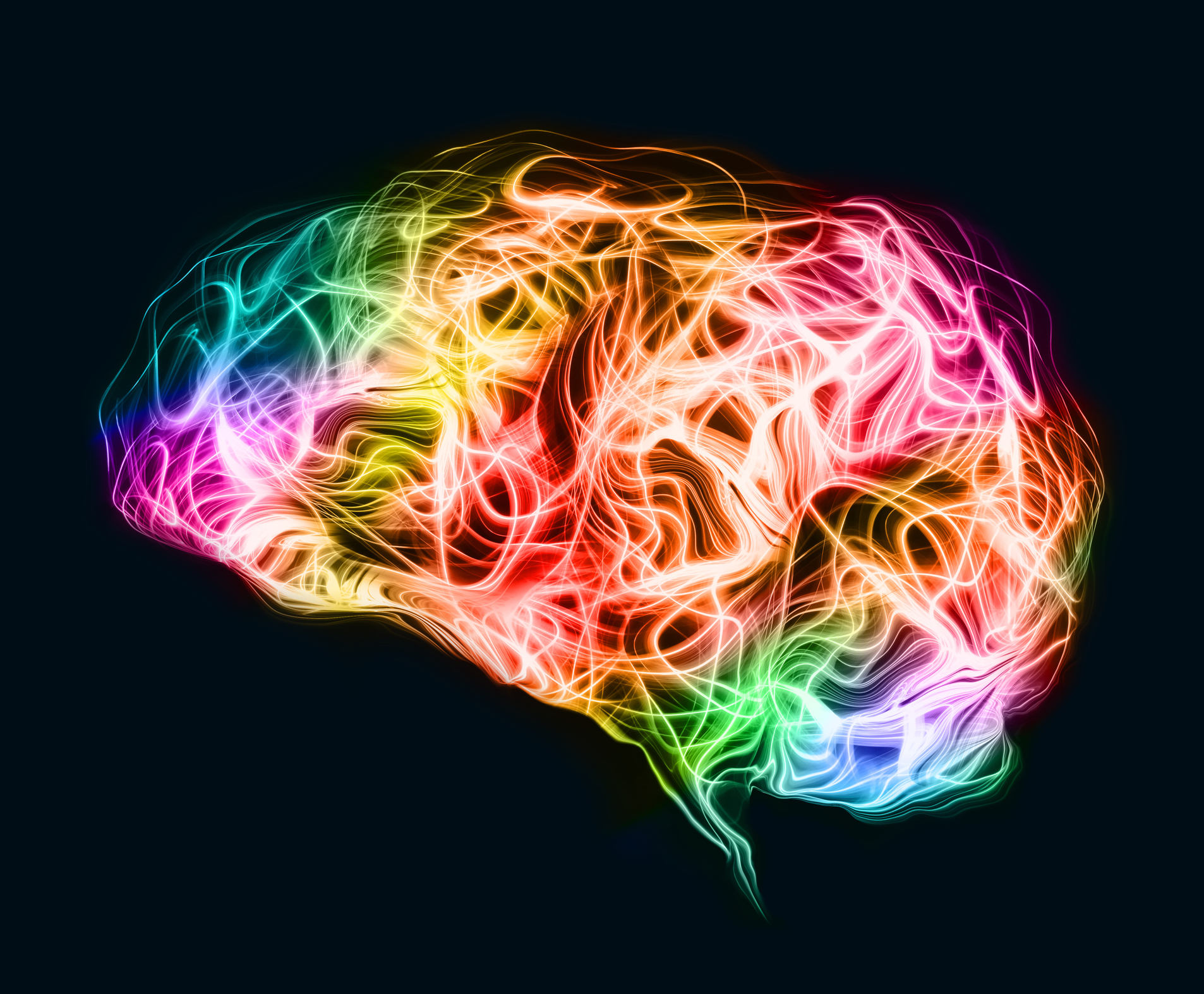
Consciousness is central to understanding our existence. The questions are simple – What is it? Where did it come from? What happens to it when we die? The answers are elusive. At the end of the day, there are theories to explain the neurobiological and neuroanatomical origins of consciousness, but they all fall short of answering the “hard problem of consciousness”[1] : how physical processes in the brain produce subjective experience, what philosophers call qualia[2]. In other words, why does neural activity produce the feeling of being conscious at all? Part of the problem may be that we must use consciousness itself to understand consciousness. We have no external frame of reference from which to understand it.
But that is neither here nor there. My real interest in consciousness is not how, but where. By that I mean philosophically where did it come from, where does it exist during life, and where does it go after death. I’ve previously written about an adjacent concept through the lens of Terror Management Theory (TMT) and concluded I’m most comfortable with the cosmic continuity theory of our physical body. I’m comfortable with that part of the story. What is of great interest is what, if anything, happens to my consciousness after death. The short answer is that’s it’s gone, but that’s far from the complete story.
The cold neurological explanation invokes the concept of a dissipative structure: 1) the brain is a highly complex dynamic system, 2) neural activity forms temporary patterns, 3) those patterns generate subjective experience, and 4) when brain activity ceases, the pattern stops. That makes sense to me, but I prefer a bit more context to inform my understanding.
Dependent Organization
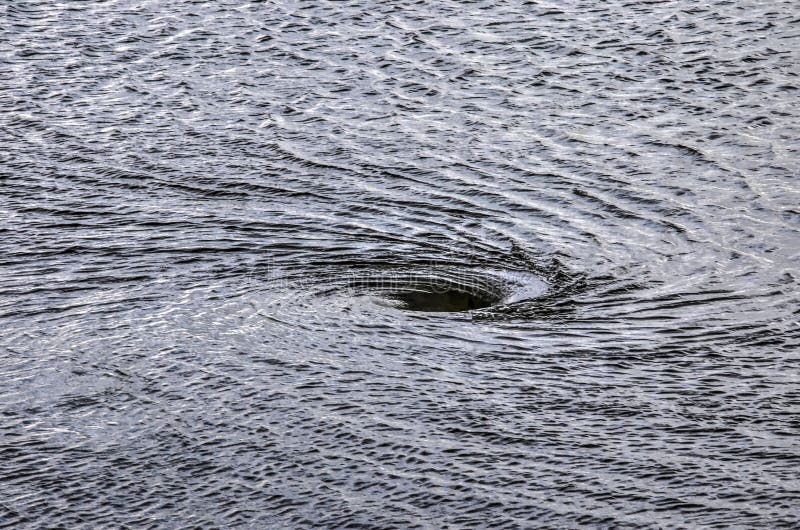
A whirlpool is an analogy to understand the contextual framework of consciousness as a dissipative structure. As water flows past a point in a river an observer may see a whirlpool appear. We are incapable of completely understanding why it formed or exactly when it exactly formed because, similar to a starling murmuration, it is the result of a complex adaptive system. One moment there was just a gently flowing river, then, the whirlpool appeared for a few minutes and then disappeared leaving just the flowing river.
Consciousness may appear in our brains from an immensely complex web of neurological interactions. This is not a permanent state. In deep sleep, consciousness may be very severely depressed, in general anesthesia, it is completely suppressed. However, when the complex web is regenerated, consciousness reappears. That fits the description of a dissipative structure nicely, but it seems to have an expiration date that matches the physical shutdown of the body. That makes sense but doesn’t provide the same comfort to me as cosmic continuity.
Turning to Thích Nhất Hạnh[3]
Thích Nhất Hạnh rejected the idea that consciousness is a permanent entity or soul. Instead, he taught that consciousness is a dynamic process arising from many conditions. It continually changes, just as the body does. This reflects the Buddhist doctrine of Anatta, the idea that no permanent independent self exists.
He often summarized this simply: “There is no permanent self behind our thoughts and perceptions.” However, he emphasized that continuity of consciousness does not mean a permanent soul travels from life to life. Instead, what continues are patterns of causes and conditions.
He compared it to a flame passing from one candle to another:
- the flame continues
- but it is not exactly the same flame
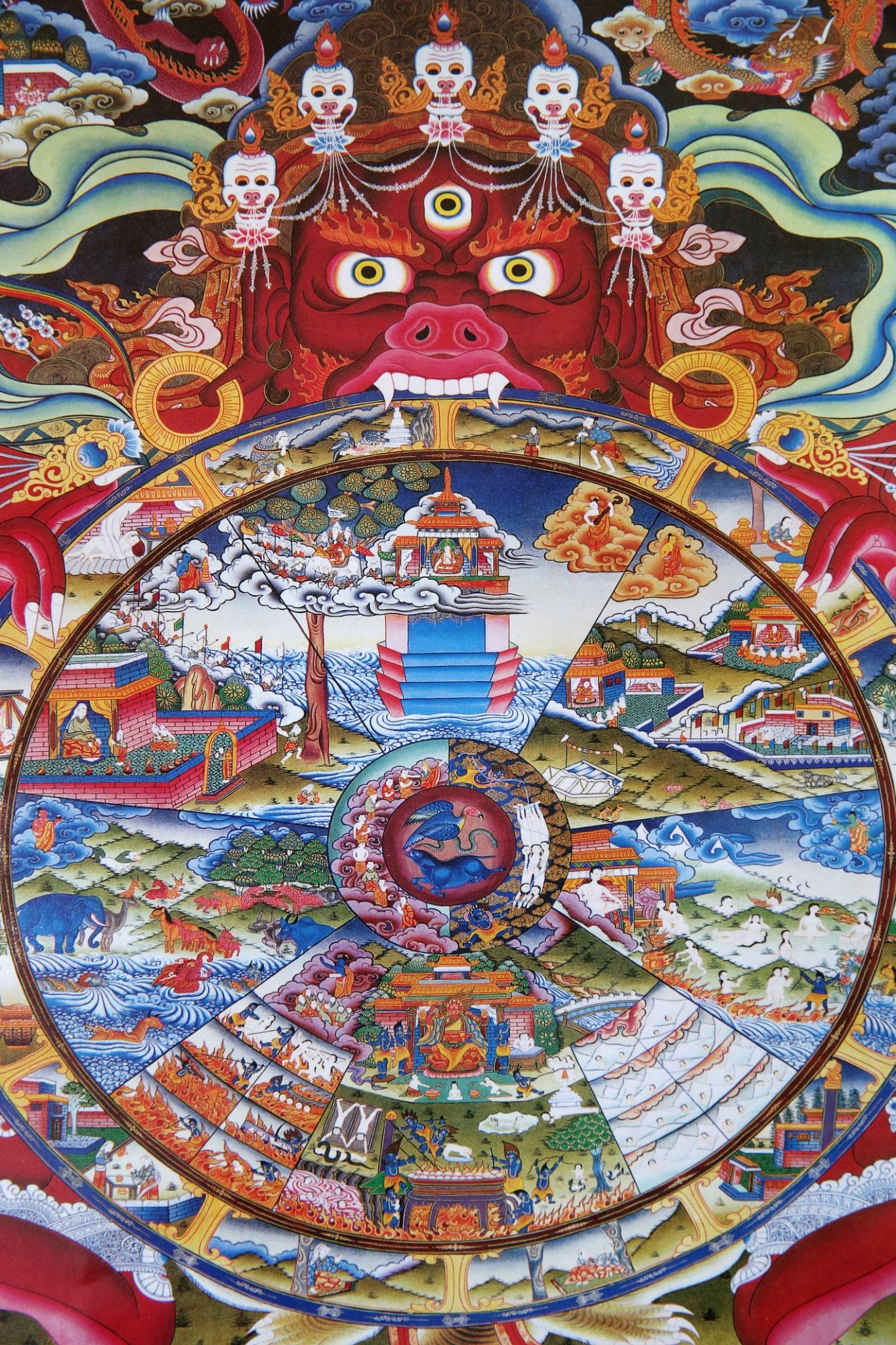
This analogy is more broadly captured in the Buddhist principle of dependent origination (paṭicca samuppāda[4]) or dependent origination which is the principle describing the interdependent and conditional nature of all phenomena. It explains that nothing exists in isolation or by its own essence; rather, everything arises and ceases due to specific causes and conditions.
This all makes sense to me, but I still find myself regretting that I won’t understand how the world unfolds after I’m gone. I may just need to quell my curiosity about that or become a Buddhist monk. But all in all, it may not be awful to be a transitory whirlpool in a stream.
[1] Chalmers, David (1995). “Facing up to the problem of consciousness” (PDF). Journal of Consciousness Studies. 2 (3): 200–219.
[2] “Qualia are the subjective or qualitative properties of experiences. What it feels like, experientially, to see a red rose is different from what it feels like to see a yellow rose. Likewise for hearing a musical note played by a piano and hearing the same musical note played by a tuba. The qualia of these experiences are what give each of them its characteristic “feel” and also what distinguish them from one another.” – https://iep.utm.edu/qualia/
[3] Thích Nhất Hạnh was a Buddhist Zen master was also a prolific writer wrote extensively about Buddhist philosophy in English and French. See https://plumvillage.org/about/thich-nhat-hanh/biography
[4] “The chain, or law, of dependent origination, or the chain of causation—a fundamental concept of Buddhism describing the causes of suffering (dukkha; Sanskrit duhkha) and the course of events that lead a being through rebirth, old age, and death.” – https://www.britannica.com/topic/paticca-samuppada
 Confronting Mediocrity