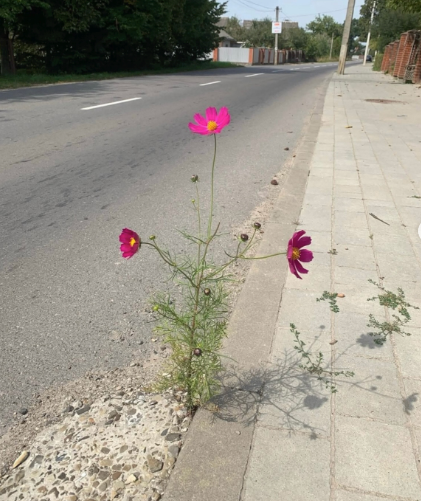
Progress has made life easier in ways previous generations could hardly imagine. We live in warm homes in winter, navigate unfamiliar cities with GPS, and can buy strawberries in January. These advances are real achievements, and few people would willingly return to the inconveniences of the past. Yet progress carries an underappreciated paradox: by removing friction from daily life, it may also be weakening the very quality that helps people function when things go wrong — resilience.
Resilience is the capacity to adapt when circumstances change or problems arise. The American Psychological Association describes it not as a fixed personality trait but as a set of skills developed through experience and exposure to challenges. Likewise, psychologist Angela Duckworth’s research on “grit,” published in the Journal of Personality and Social Psychology[i], emphasizes perseverance and sustained effort in the face of difficulty. In other words, resilience grows from practice. It develops when people encounter obstacles and learn they can overcome them.
The difficulty today is that many ordinary obstacles have quietly disappeared.
Consider something as mundane as navigation. Not long ago, getting somewhere unfamiliar required planning. People studied maps, memorized landmarks, and occasionally asked strangers for directions. The process demanded spatial reasoning, patience, and the ability to recover when a wrong turn was made.
Today a voice from a smartphone calmly instructs us where to turn.
This is enormously convenient—until the signal drops, the battery dies, or the device fails. In that moment the technology that replaced the skill also reveals the skill’s absence. A resilient person pauses, reassesses, and works through the problem. Someone less accustomed to solving such problems may simply feel stuck. Navigation is only a small example of a broader pattern. Modern systems increasingly outsource effort.
- Memory has been delegated to search engines and digital storage.
- Orientation has been delegated to GPS.
- Food acquisition has been delegated to global supply chains.
Each innovation makes life easier. But each also reduces opportunities to practice the small acts of problem-solving that build confidence in our ability to manage the unexpected. The same dynamic appears in a less visible but arguably more consequential arena: information.
Never in history have individuals had access to so much data. Yet navigating that information requires work—evaluating sources, identifying bias, checking evidence, and resisting emotionally satisfying narratives that may not be true. That effort demands a different kind of resilience: intellectual grit.
Research on media consumption consistently shows that many people rely on cognitive shortcuts when confronted with overwhelming volumes of information. Reports from the Pew Research Center and studies published in journals such as Nature Human Behaviour indicate that people often default to simplified narratives or trusted social cues rather than carefully evaluating evidence.
In practical terms, it is easier to read a confident claim on social media or listen to a broadcast framed as news than it is to examine competing sources, understand context, and weigh probabilities. But that shortcut has consequences. When the effort required to evaluate information increases, the temptation to outsource judgment increases as well.
The result is a subtle shift: the problem is not simply misinformation. It is the gradual erosion of the habits that allow people to recognize misinformation.
None of this means progress is bad. Few people would trade modern medicine, reliable heating, or global food systems for the hardships they replaced. Progress has expanded human well-being in countless ways. But every gain has side effects. The modern world is extraordinarily good at removing friction, and friction is often the training ground where resilience develops.
Perhaps the challenge going forward is not to resist progress, but to recognize what it quietly displaces. Skills that are never exercised tend to fade. The same may be true for resilience.
A society that eliminates too many small challenges may eventually discover that it has also weakened the habits that help people confront larger ones.
[i] Duckworth, A. L., Peterson, C., Matthews, M. D., & Kelly, D. R. (2007). Grit: Perseverance and passion for long-term goals. Journal of Personality and Social Psychology, 92(6), 1087–1101. https://doi.org/10.1037/0022-3514.92.6.1087
 Confronting Mediocrity