The advancement in Artificial Intelligence (AI) capabilities continues its expansion at a breath-taking rate, but it is facing two constraints. One is the immense power data centers require to run the computers that process the AI algorithms and the other is speed at which the algorithms can be executed. Seismic changes are on the horizon for both of those barriers that will accelerate the development of AI capabilities to the next level – Artificial General Intelligence (AGI).
Quantum computing
To understand quantum computing it’s helpful to understand how quantum computers are different than classic computers. Quantum’s advantage isn’t general speed — it’s exponential speedup for very specific tasks. For example, there would be no speed difference if you compare the execution of a complex Excel spreadsheet. And in AI, most computations (like training large language models) rely on linear algebra where quantum computers would not be superior to classic computers.
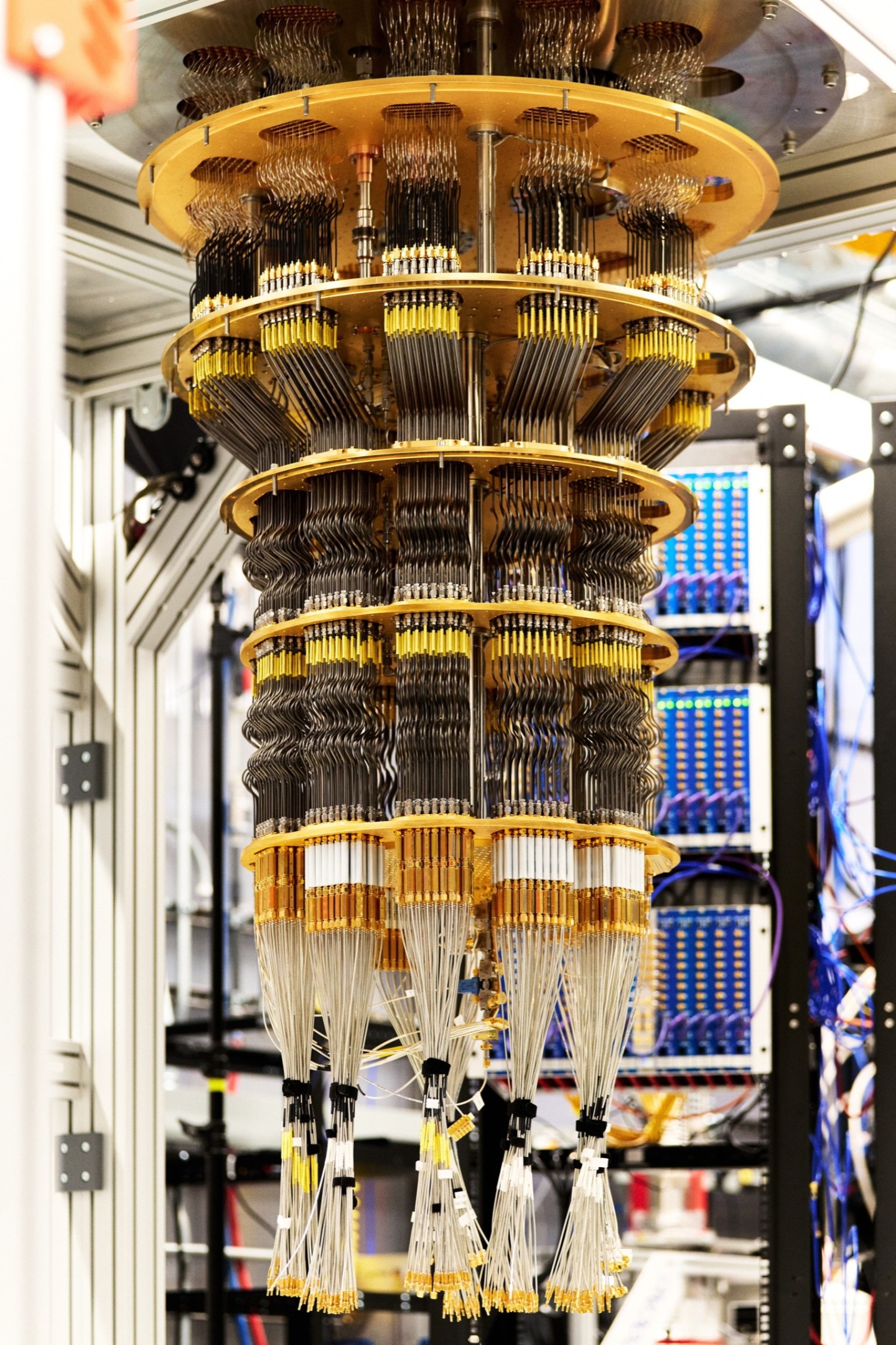
The real power of quantum computing comes when comparing massive complex simulations. For example, in simulating the behavior of a large, complex molecule relevant to a new cancer drug. The underlying math in such a simulation scales brutally with size. A classic supercomputer would require 1030 calculations but could only perform 1017 calculations per second. The means it would require a total of 1023 seconds (1030-1017) or roughly 3.17 × 10¹⁵ years – longer than human civilization has existed by a factor of millions.
In contrast a future fault tolerant quantum computer would require 109 logical operations because it handles quantum behavior “natively.” If a mature quantum computer could execute 10¹² logical operations per second (totally hypothetical but plausible as an engineering target), the time needed would be 10⁹ / 10¹² = 10⁻³ seconds = 0.001 seconds. The comparison would be 3.17 × 10¹⁵ years versus one millisecond (10⁻³ seconds). You don’t need to follow the math to see the point: quantum turns a cosmically long computation into an instant. Imagine how that would revolutionize the search for new molecules to treat cancer. It will make current impossible discoveries possible.
Nuclear fusion
A dirty aspect of Ai is that it consumes vast amounts of electricity which in turn has distinct environment impacts as well as increased costs for all users on the grid. At present, AI power consumption is large and growing but it’s not yet a dominant share of total grid. Once electricity becomes widely available with fusion, those problems vanish. Data centers can consume all the power they need with a massively reduced environmental impact.
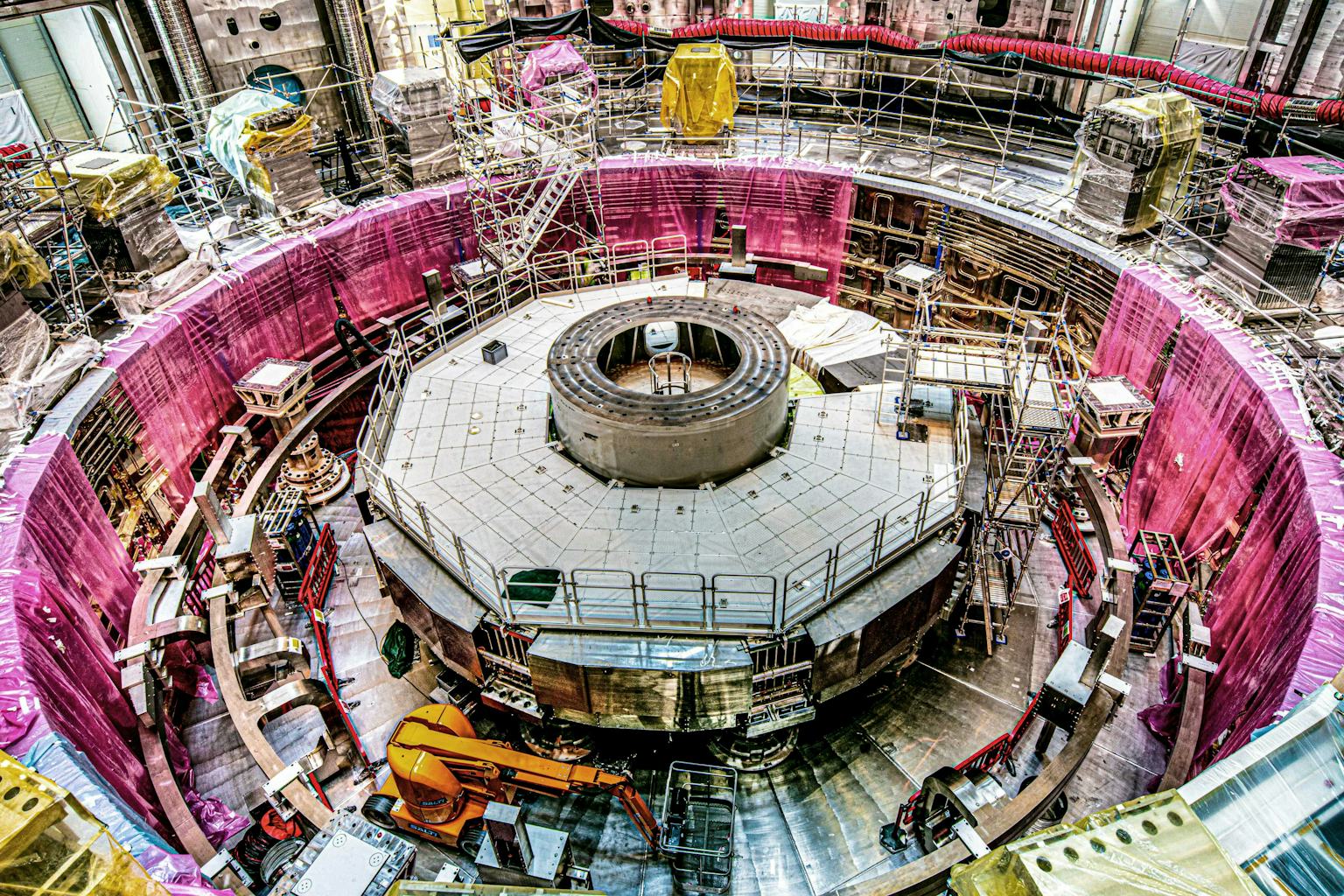
The dream of power generation by nuclear fusion was recognized in the 1930s, but its attainment has been elusive – until recently. The concept is simple – two light nuclei (deuterium and tritium) collide to form a single heavier nucleus. Energy is released because the total mass of the resulting single nucleus is less than the mass of the two original nuclei. The leftover mass becomes energy in accordance with Einstein’s equation (E=mc2). Simple enough (??). Currently, fusion reactors have been designed and tested that briefly produce more energy than they consume. Each day it seems there are new reports of a fusion reaction lasting longer and longer. These are exciting times and we are at the beginning of a new era, but to be sure, it will take decades to have fusion reactors showing up on the power grid, but that occurrence is inevitable.
AI
With quantum computing and nuclear fusion as the foundation, AI will evolve at an even faster pace than today and achieving true Artificial General Intelligence, the ability to solve problems with the flexibility and general reasoning of a human, will be considered commonplace. AI will become integral to our existence, and we will become dependent on it. But will we be ready for it, will it be available to all people, will it even be accepted or will it be viewed as a malevolent deity that few understand?
Soul of a New Machine
Tracy Kidder’s 1981 book, “Soul of a New Machine” shows a small group of engineers building something transformational, while the broader public has no idea what it actually is. This leads to psychological and cultural dislocation. When people don’t understand a technology it can lead to fear, conspiracy, denial, nostalgia for simpler systems, anger at elites, or political movements that reject expertise. We see those tendencies today in anti-vaccine movement, climate denial, QAnon, and anti-technology populism.
If there is such a response to the technology Holy Trinity, then the world will become destructively divided. And how that will play out – I have no idea.
 Confronting Mediocrity